The Sword
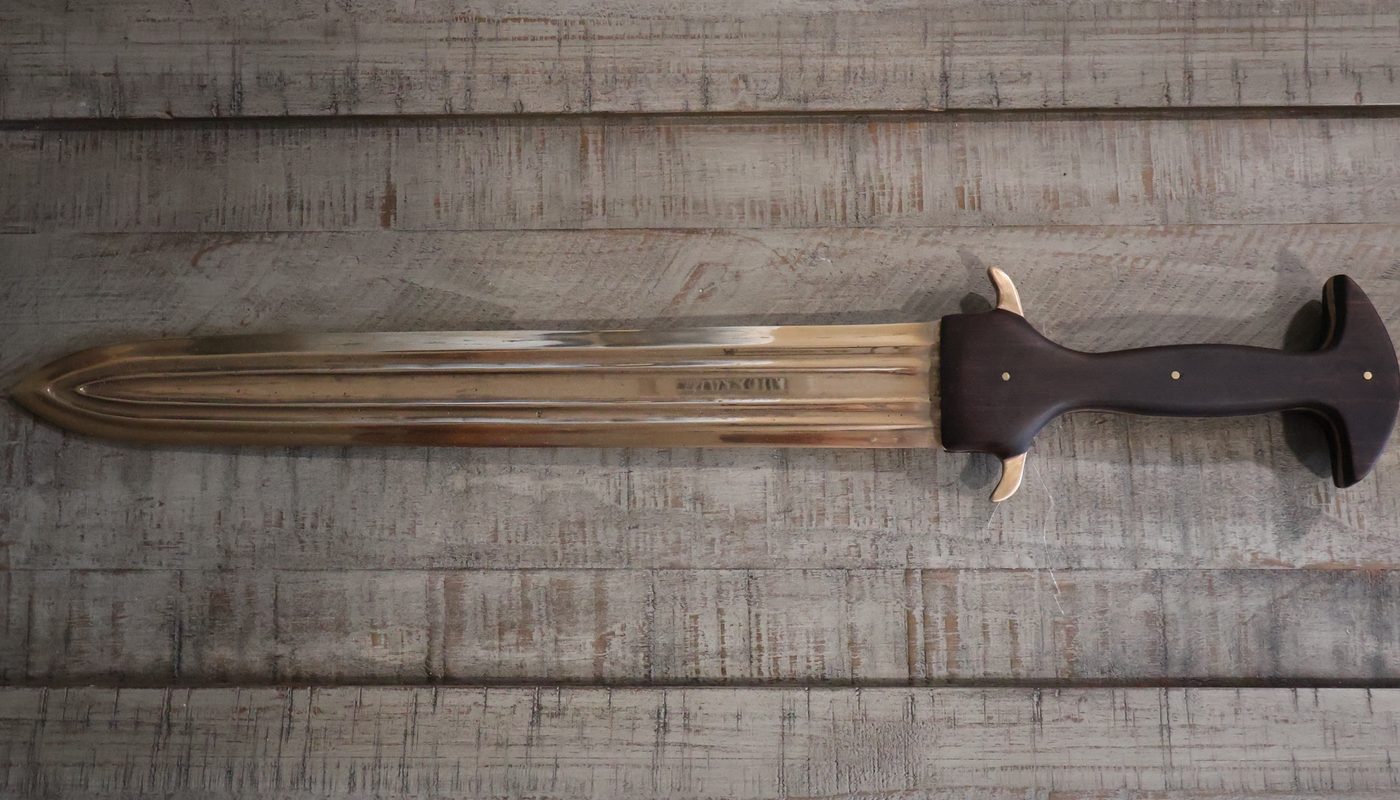
One piece, end to end.
Hilt
The grip is cut from one block.
Shaped to the hand and pinned through with brass. The pommel flares wide at the end so the weight sits back toward the wrist instead of out at the point.
Hardwood scales · three-pin construction
Guard
The quillons are cast, not bent.
Poured as their own pieces, filed back, and fitted to the blade root where the wood closes over the tang. It is the joint that fails first on a badly made sword.
Cast bronze · fitted to the tang
Blade
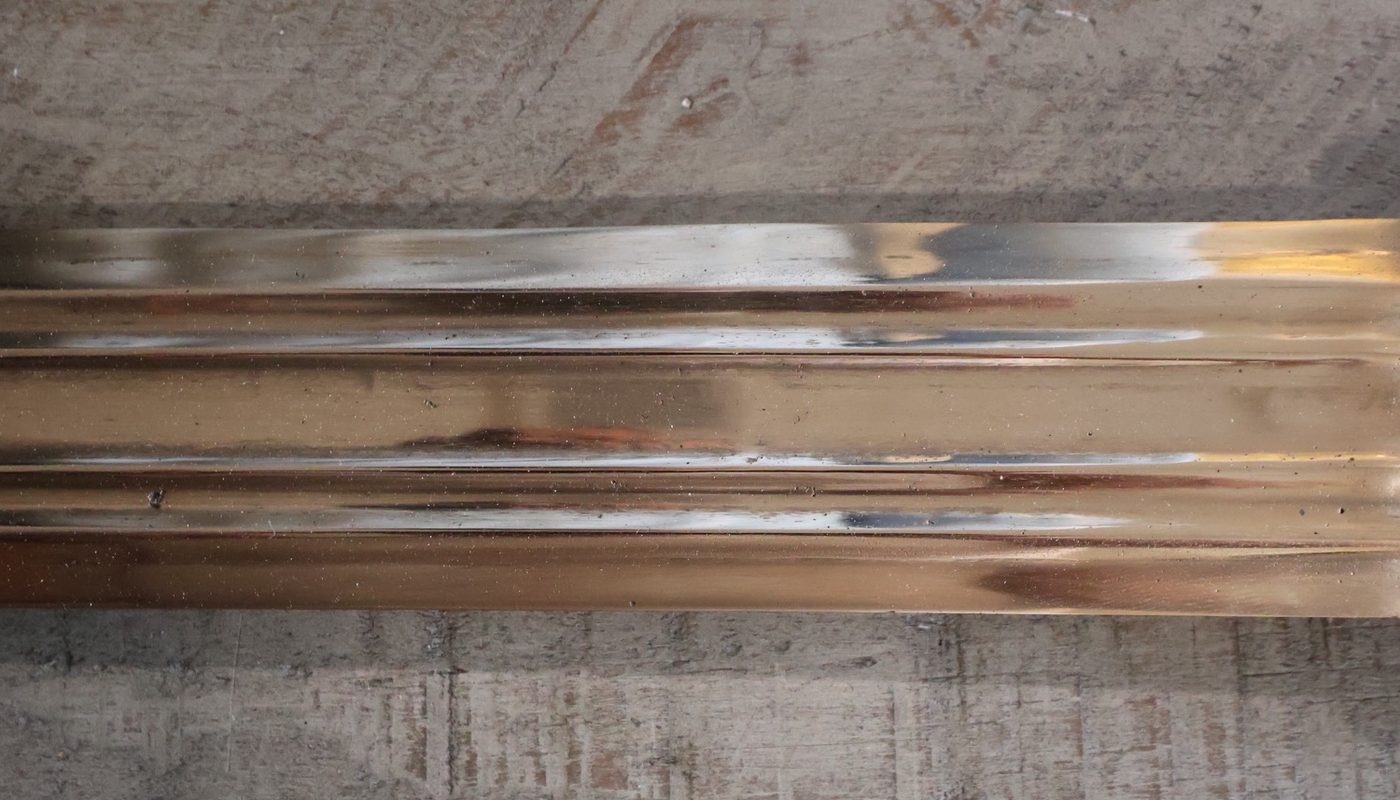
Four fullers run the length of it.
The grooves take weight out of the blade without taking away its stiffness — the same reason an I-beam is not a solid bar. Cut by hand, then polished back to bronze.
Fullered by hand, then polished
Point
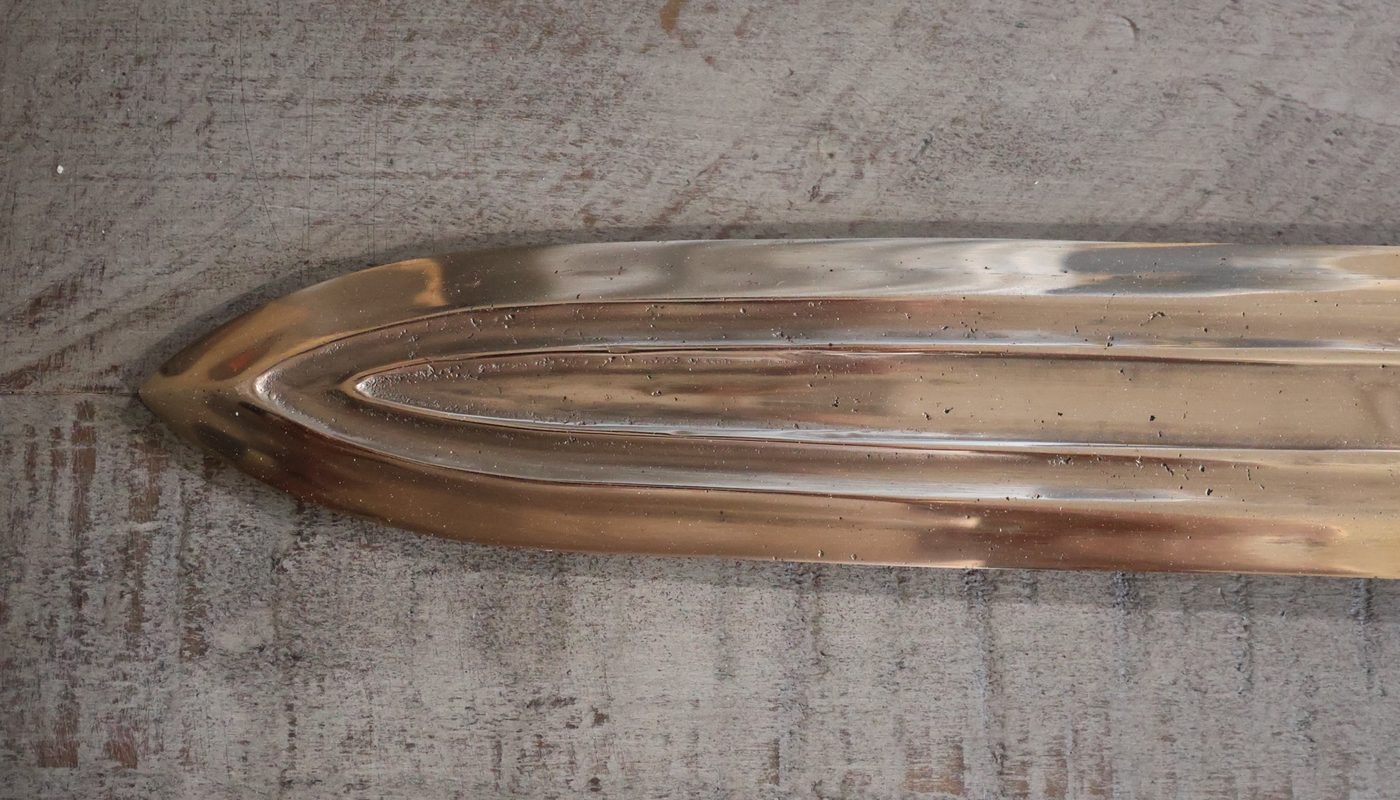
The fullers close at the tip.
Nothing about the point is added on. The grooves run out and converge, and where they meet is where the blade ends — a leaf profile that thrusts as well as it cuts.
Leaf profile · one continuous casting
The whole piece
All of it, together.
Roughly two feet of bronze and hardwood, built the way the originals were built: cast, ground, fitted and finished by one person at one bench.
Bronze and hardwood · made by hand
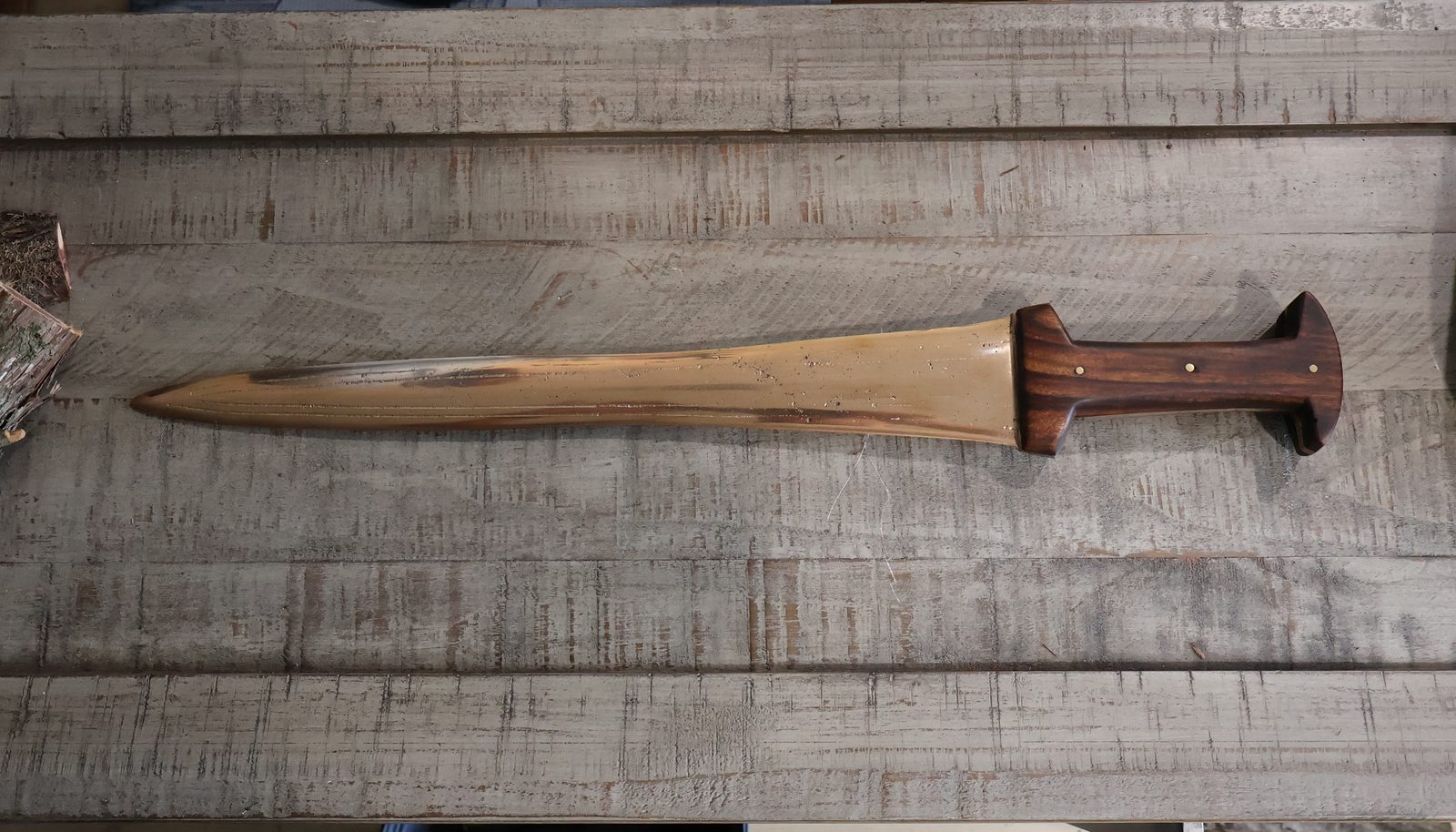
The Second Sword
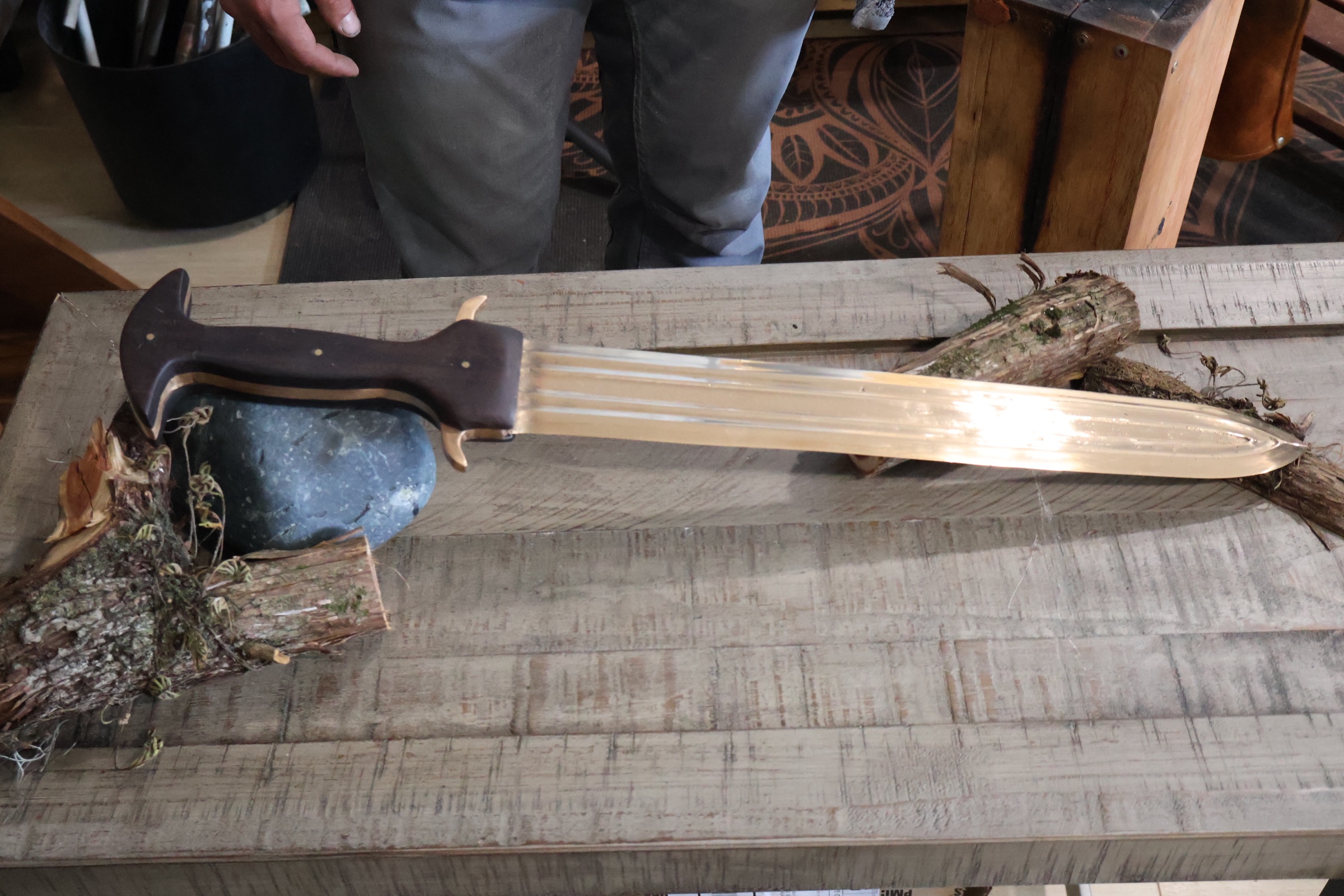
A longer blade, the same hand.
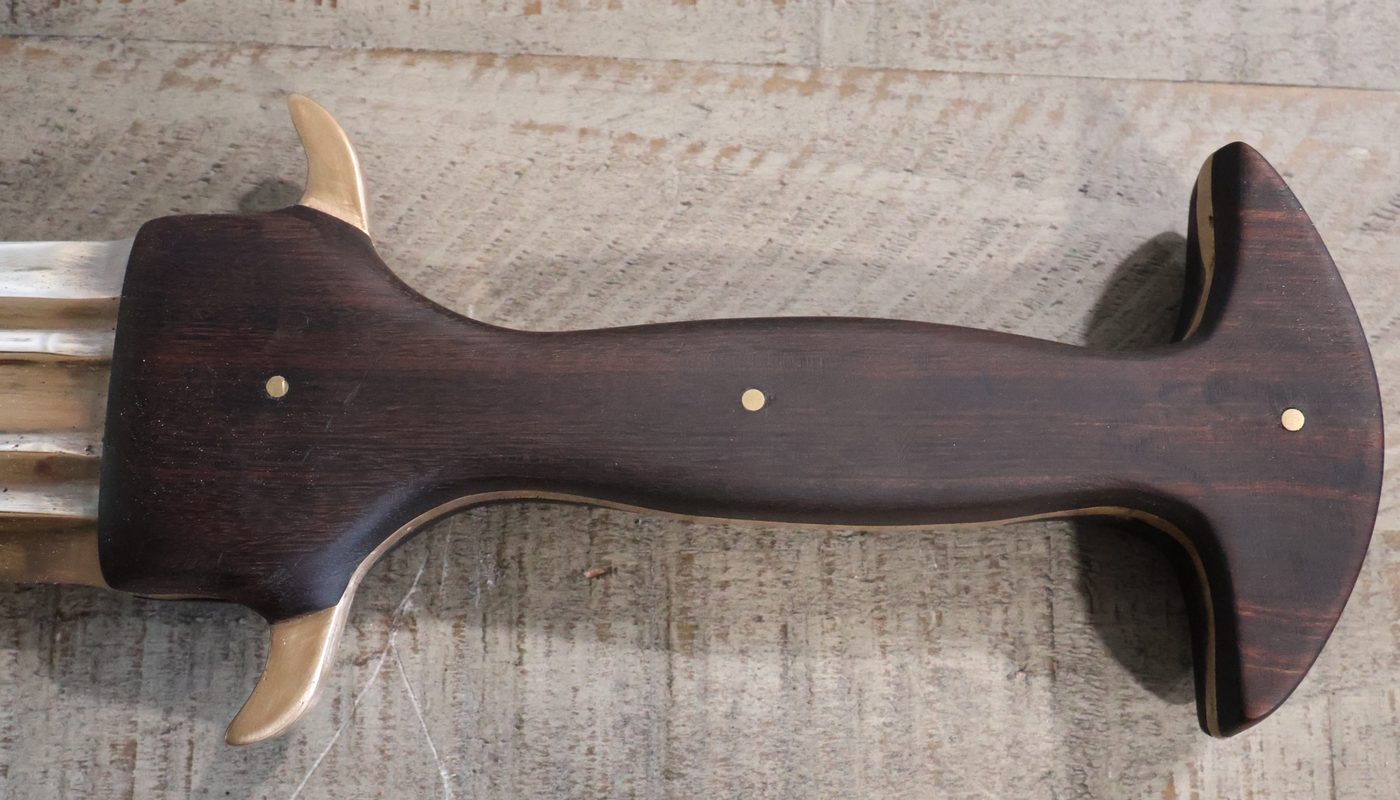
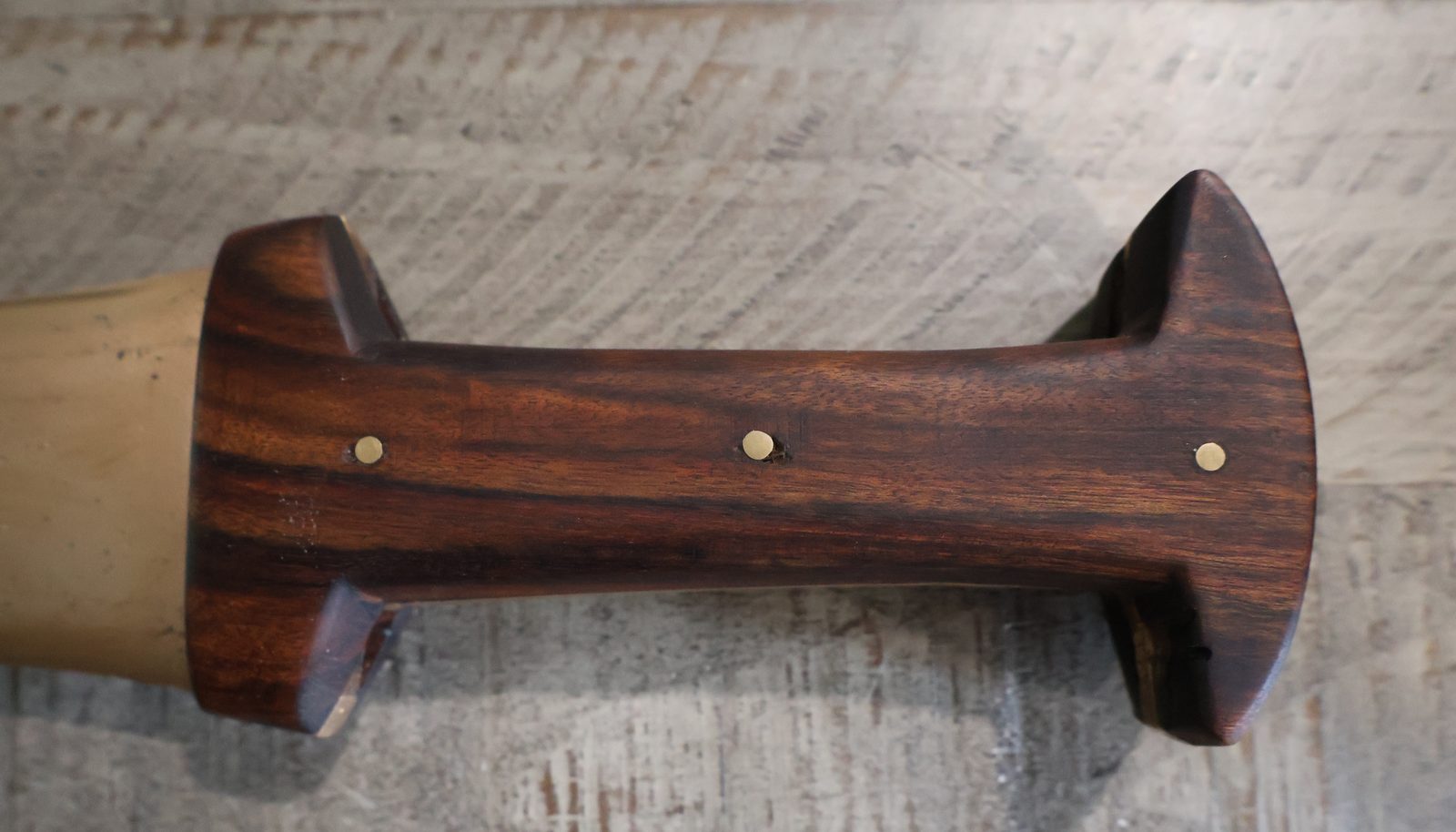
Handle
Three pins, straight down the centre.
Dark figured hardwood, waisted in the middle so the hand finds the same place every time, and pinned through with brass rather than glued.
Hardwood scales · three-pin construction
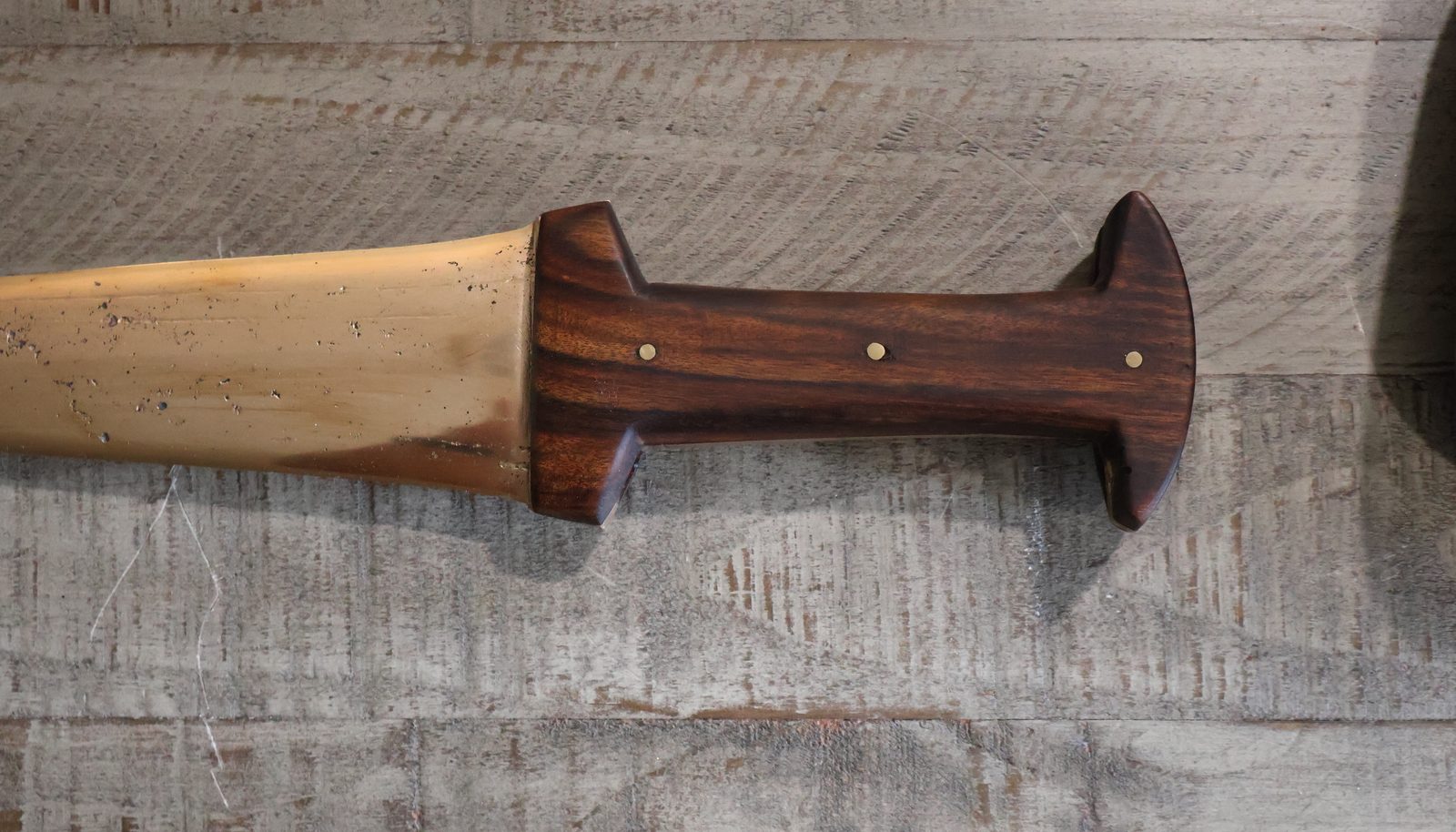
Guard
Wood closes over the shoulder.
No cast quillons on this one. The grip is cut to meet the blade shoulders directly, so the line runs unbroken from bronze into wood.
Fitted to the tang · no separate guard
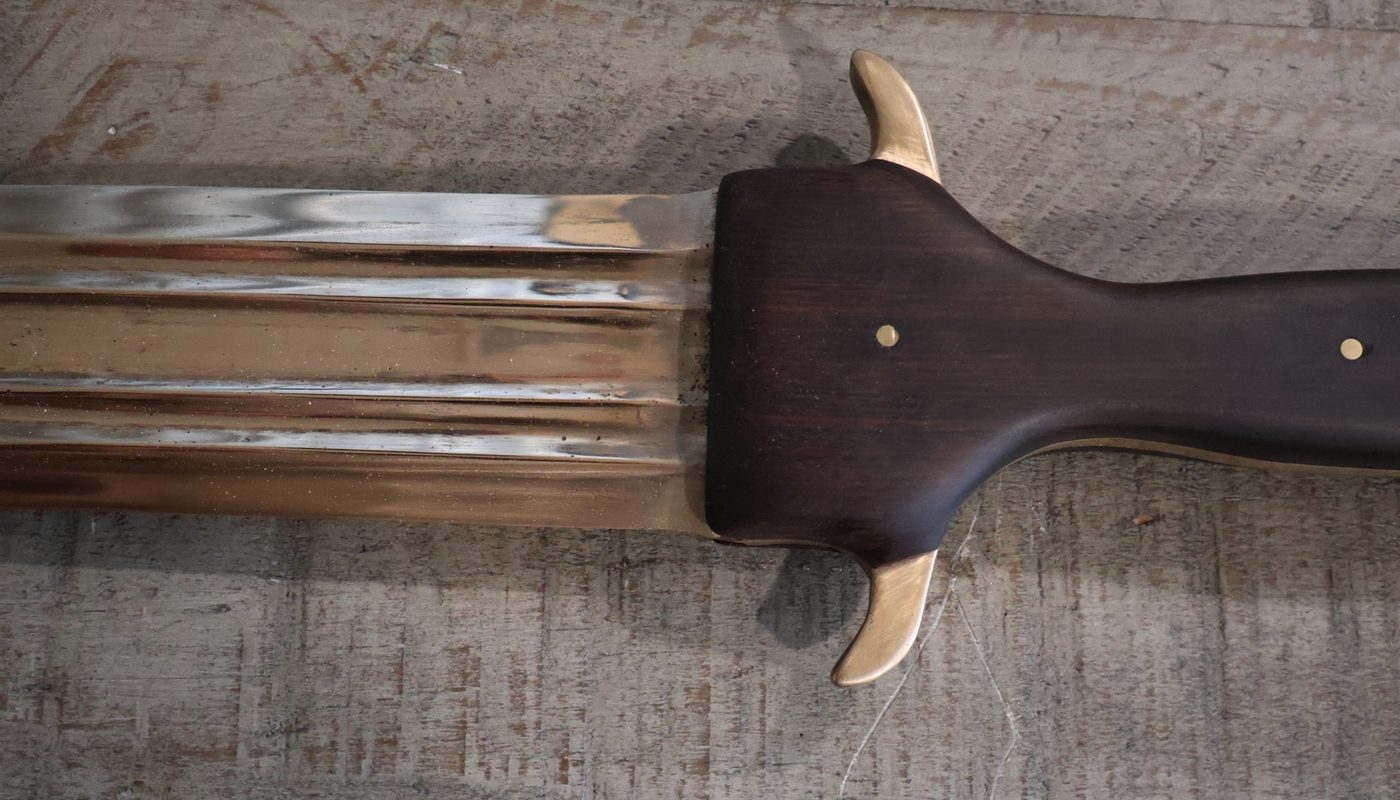
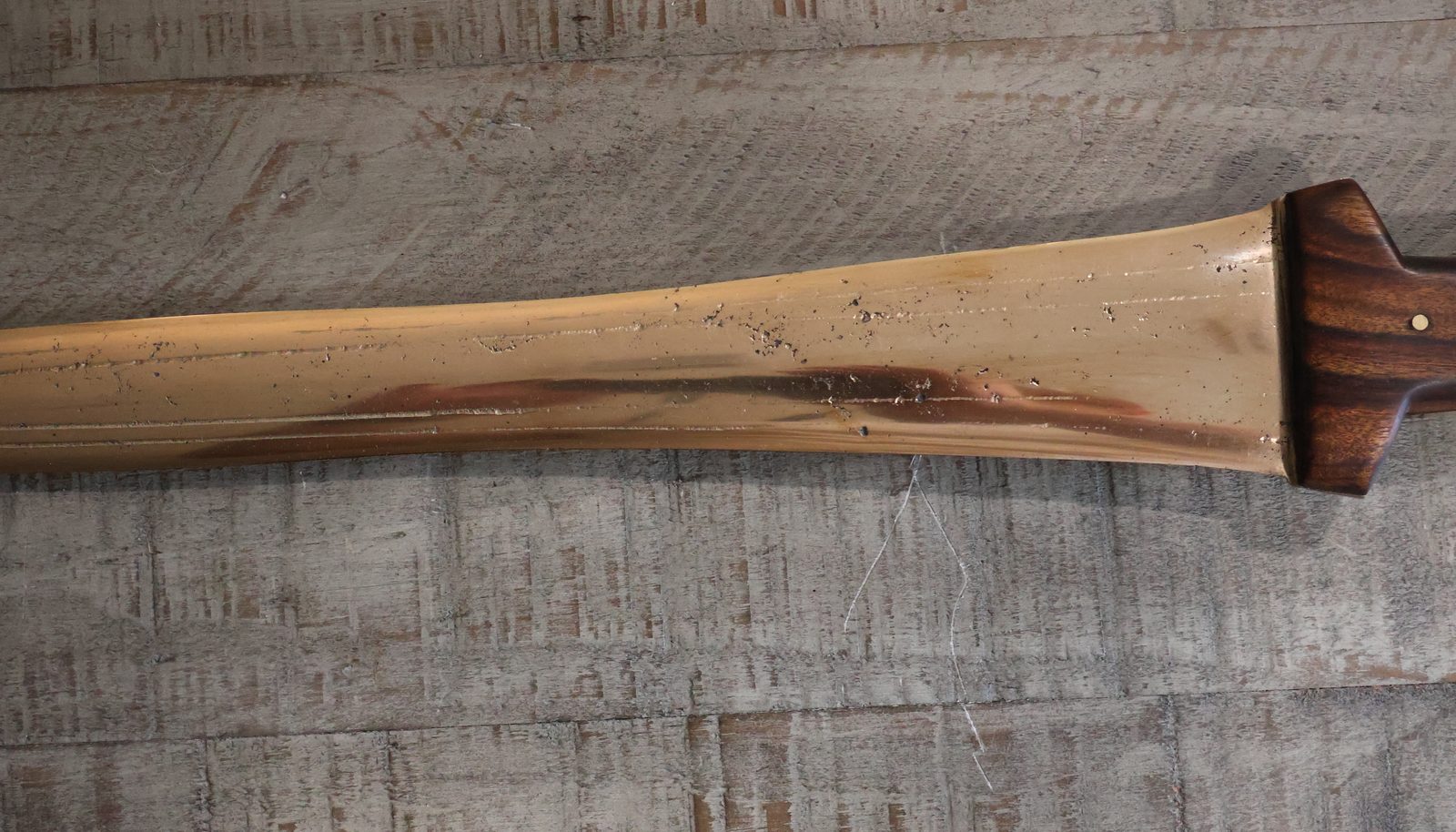
Blade
It widens before it tapers.
The blade swells out of the handle and carries that width most of its length before drawing in. The dark banding is the casting itself, left visible rather than polished away.
Cast bronze · polished, not plated
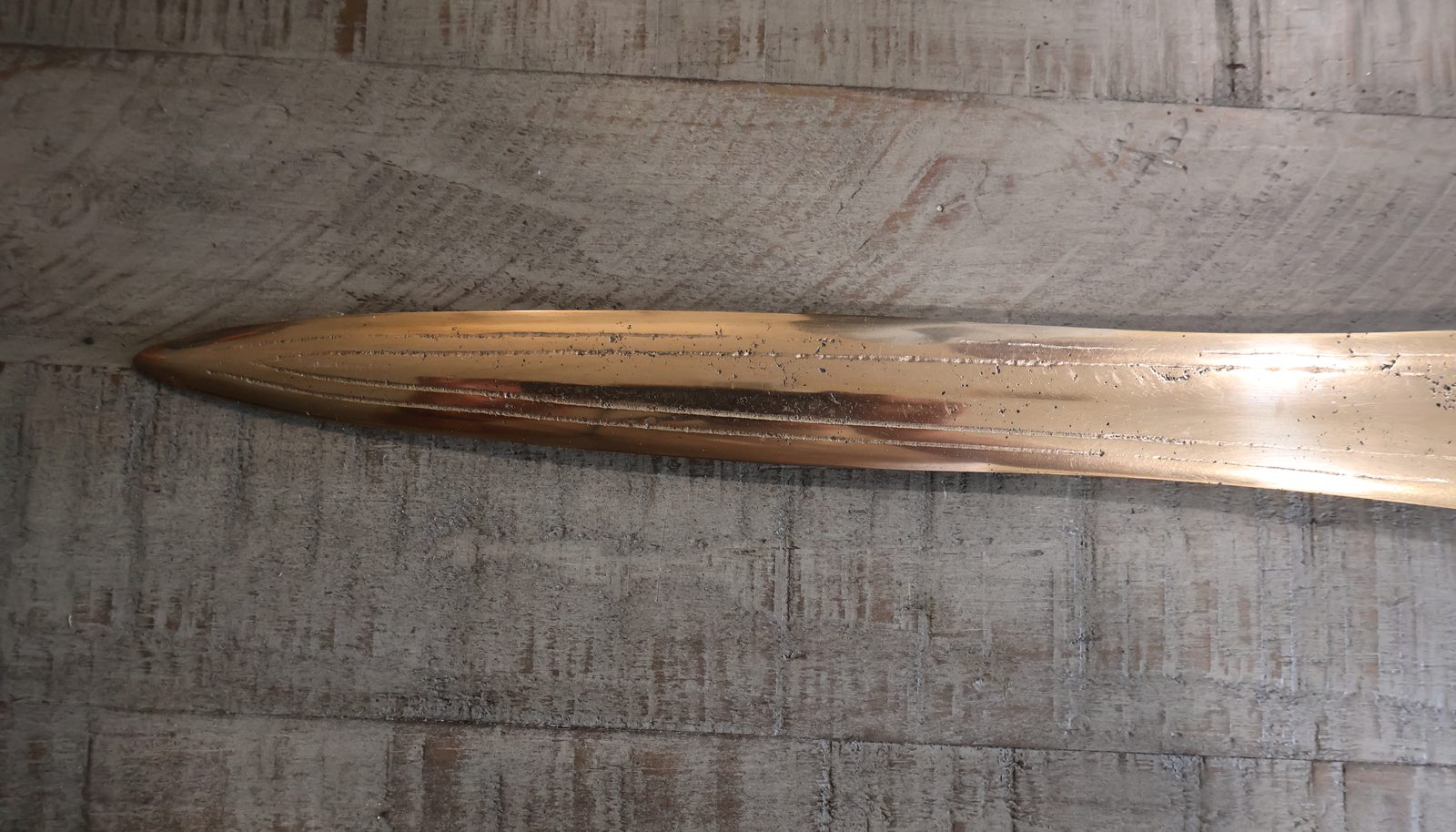
Point
A long, narrow leaf.
The taper runs a long way out before it closes. Raised lines follow the profile all the way to the tip, so the point reads as the end of the blade rather than something ground onto it.
Leaf profile · ground and polished by hand
The whole piece
All of it, together.
Longer and narrower than the first, and lighter in the hand for it. Cast, ground, fitted and finished by one person at one bench.
Bronze and hardwood · made by hand
The Knife
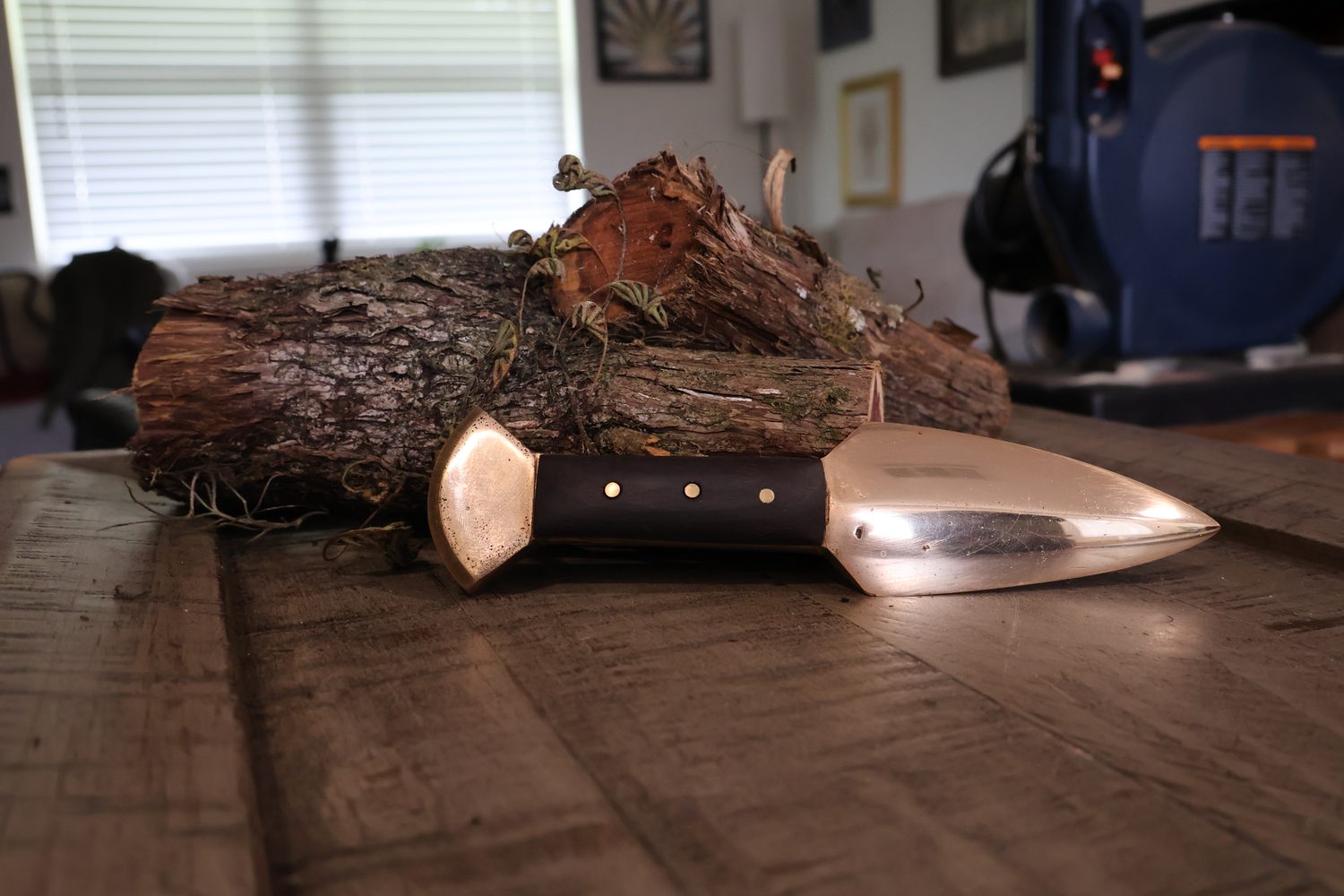
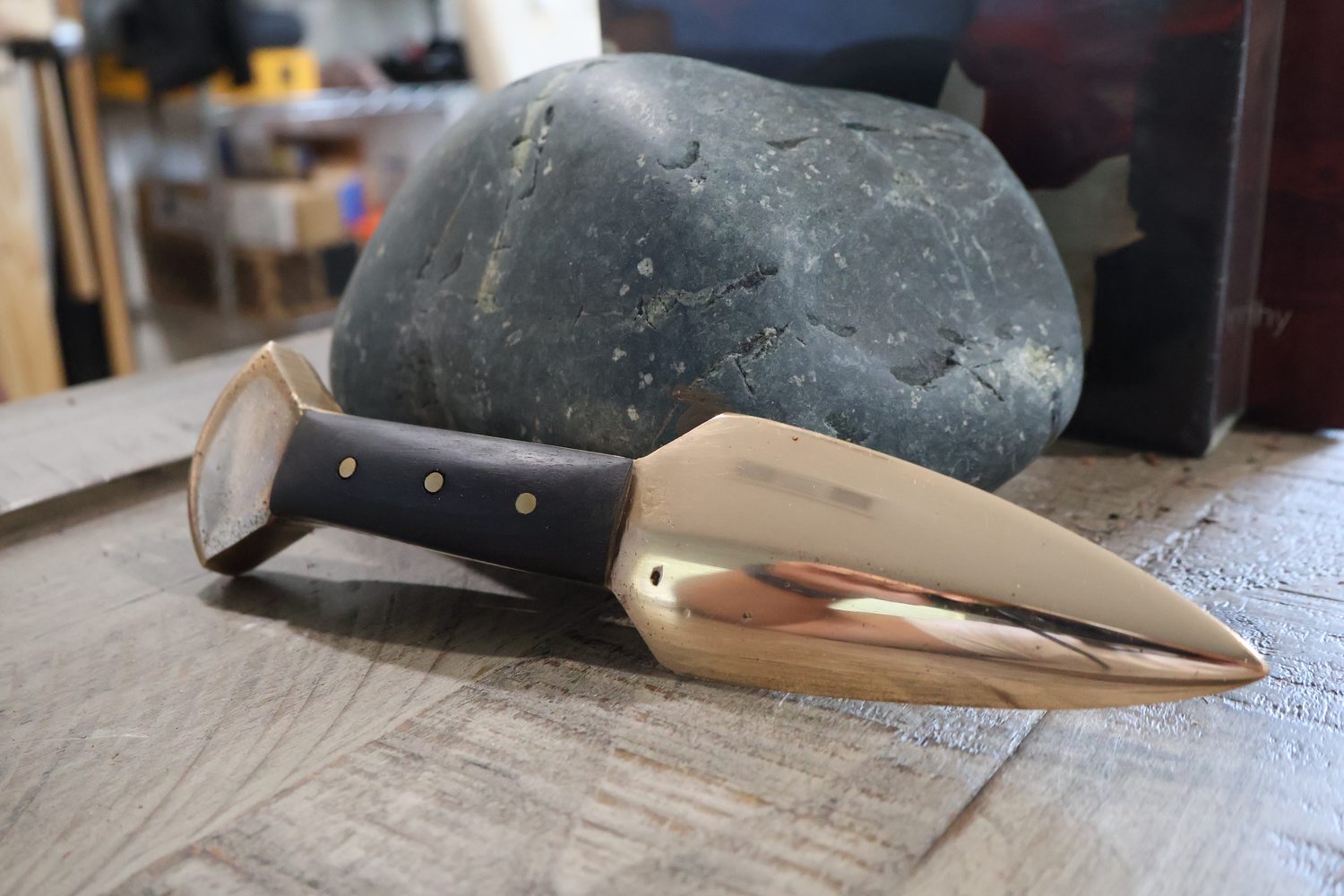
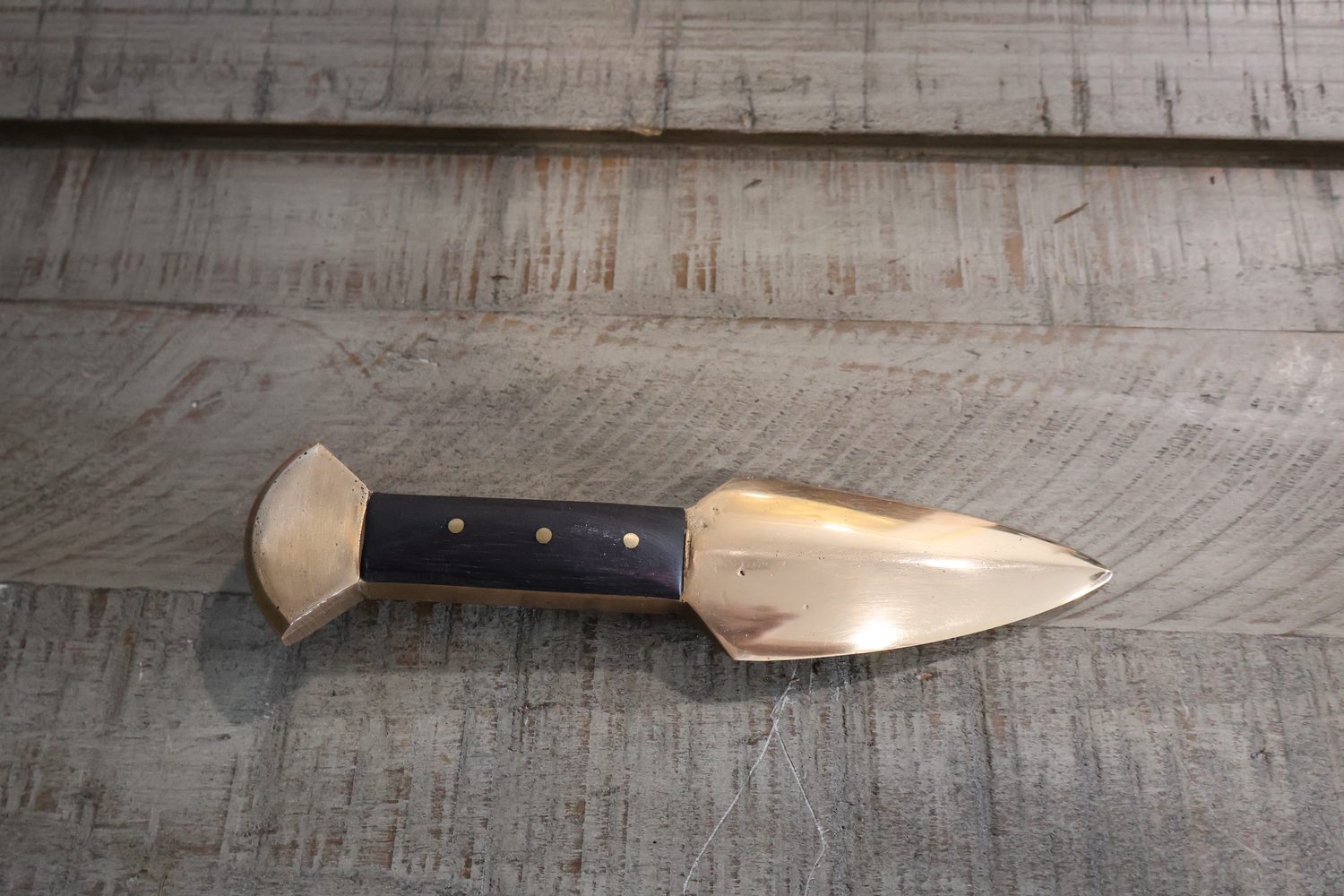
The small one.
A short bronze blade with the same dark grip and brass pins as the swords — a whole piece at a fraction of the length.
Why bronze.
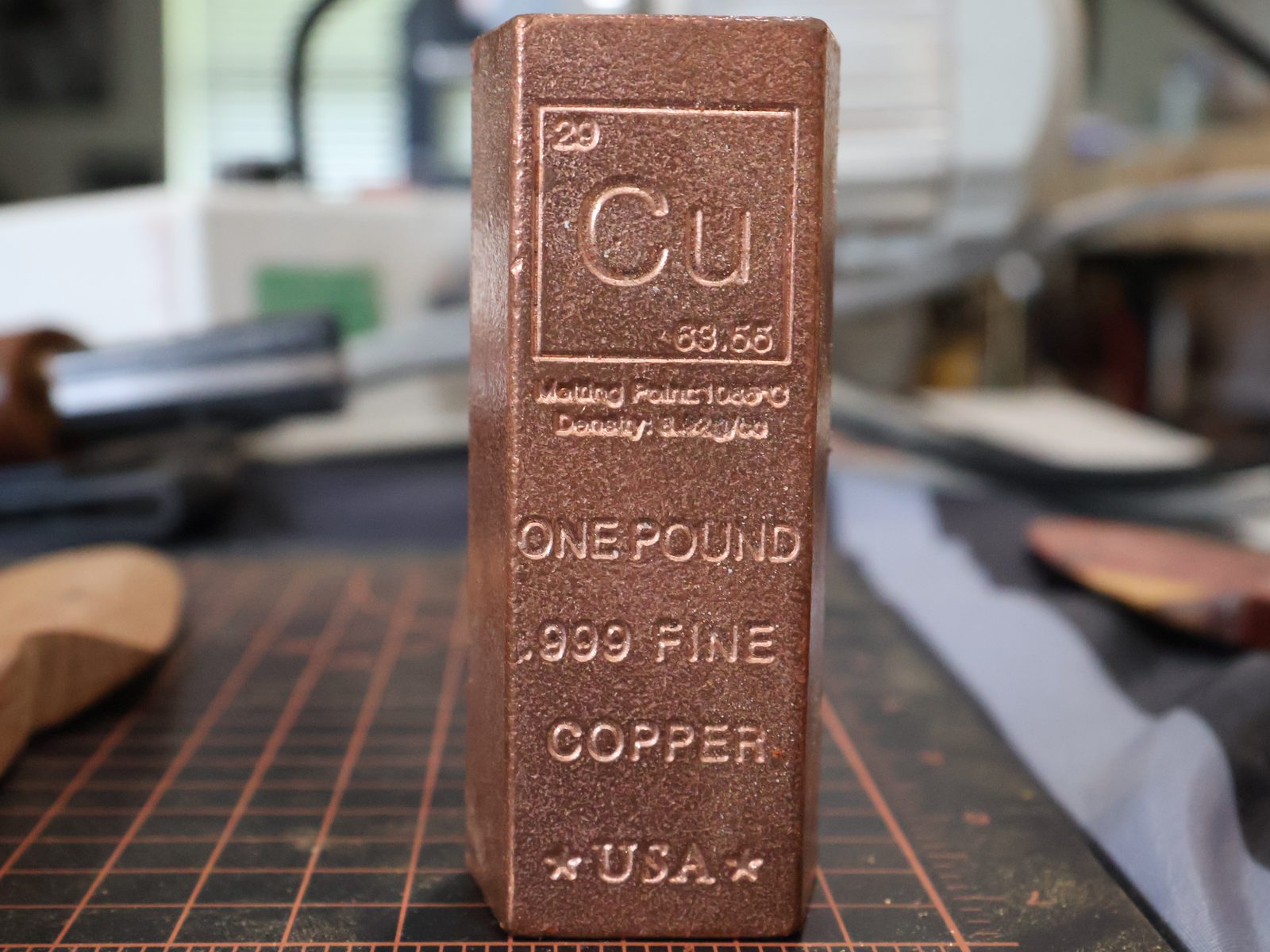
Steel is the obvious choice, which is most of why I don’t use it. Bronze came first, and it behaves nothing like steel in the hand. I work a tin bronze — roughly nine parts copper to one part tin — cast, then worked cold along the edge. That last part is what people miss about bronze: hammering the edge compresses the metal and takes it considerably harder than the casting alone ever would. It holds an edge better than its reputation suggests. And it ages. Steel rusts and you spend the rest of your life fighting it. Bronze oxidises to a green-brown patina that settles over years, takes on the hands that carried it, and never looks the same on two pieces.
The craft.
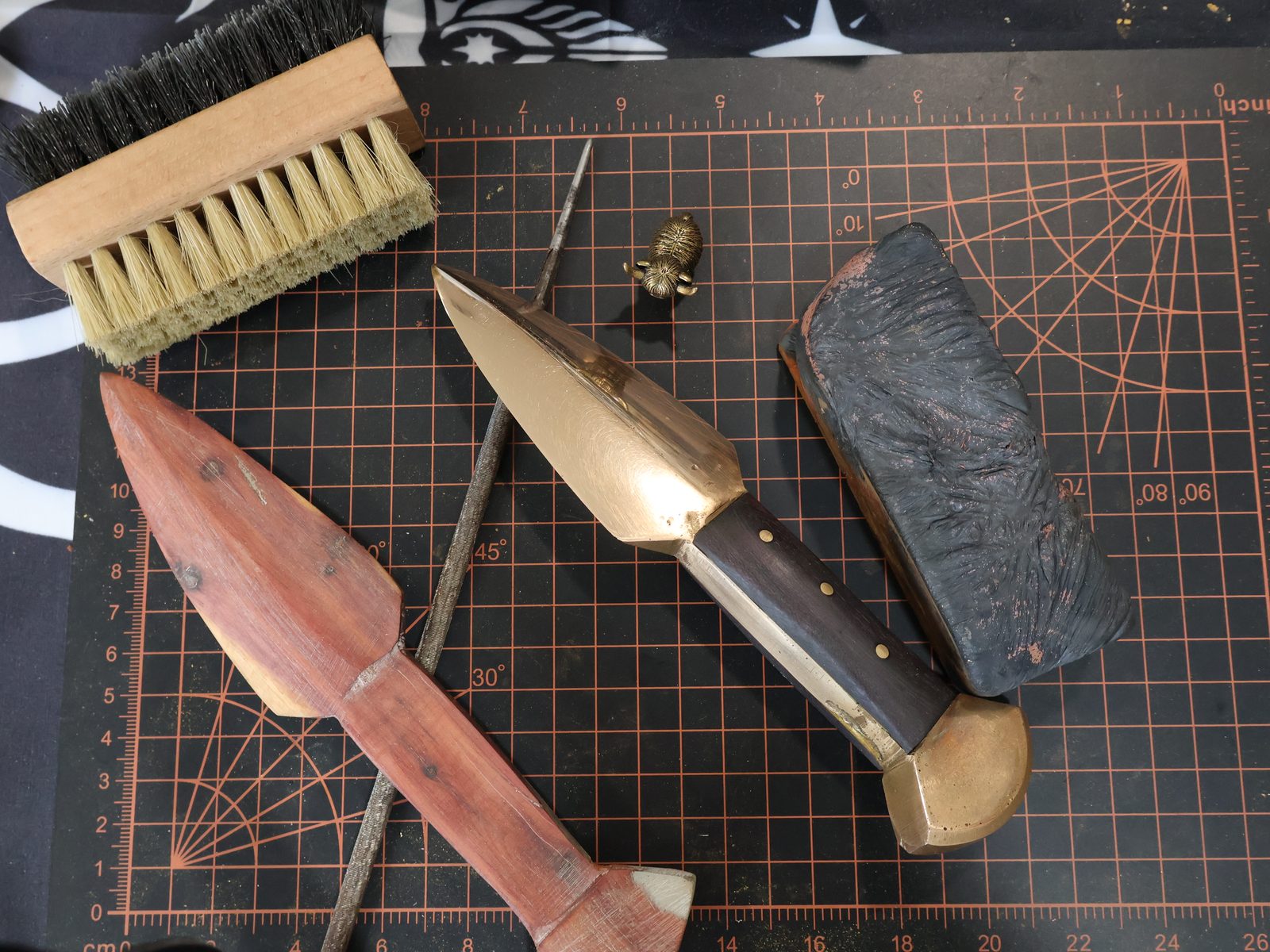
Nothing here is machined out in one pass. A pattern gets carved in wood first, so the shape can be held and judged before any metal is poured. The casting comes back rough and everything after that is hand work — files, stones, wire brush, abrasives worked finer and finer until the surface stops being a casting and starts being a blade. Handles are fitted to the tang and pinned through with brass rather than glued. It is slow, and it is the reason no two come out identical: every piece follows the same pattern and every piece is finished by hand.
The Process
Four steps, start to hand.
-
Inquiry
You tell me what you’re after and your budget.
-
Design
We settle the blade profile, the alloy, the handle stock.
-
Forge
The piece is made. Typically three weeks.
-
Delivery
Shipped insured, tracked, and signed for.
Commission
Start the conversation.
Tell me what you have in mind. I answer every inquiry personally.